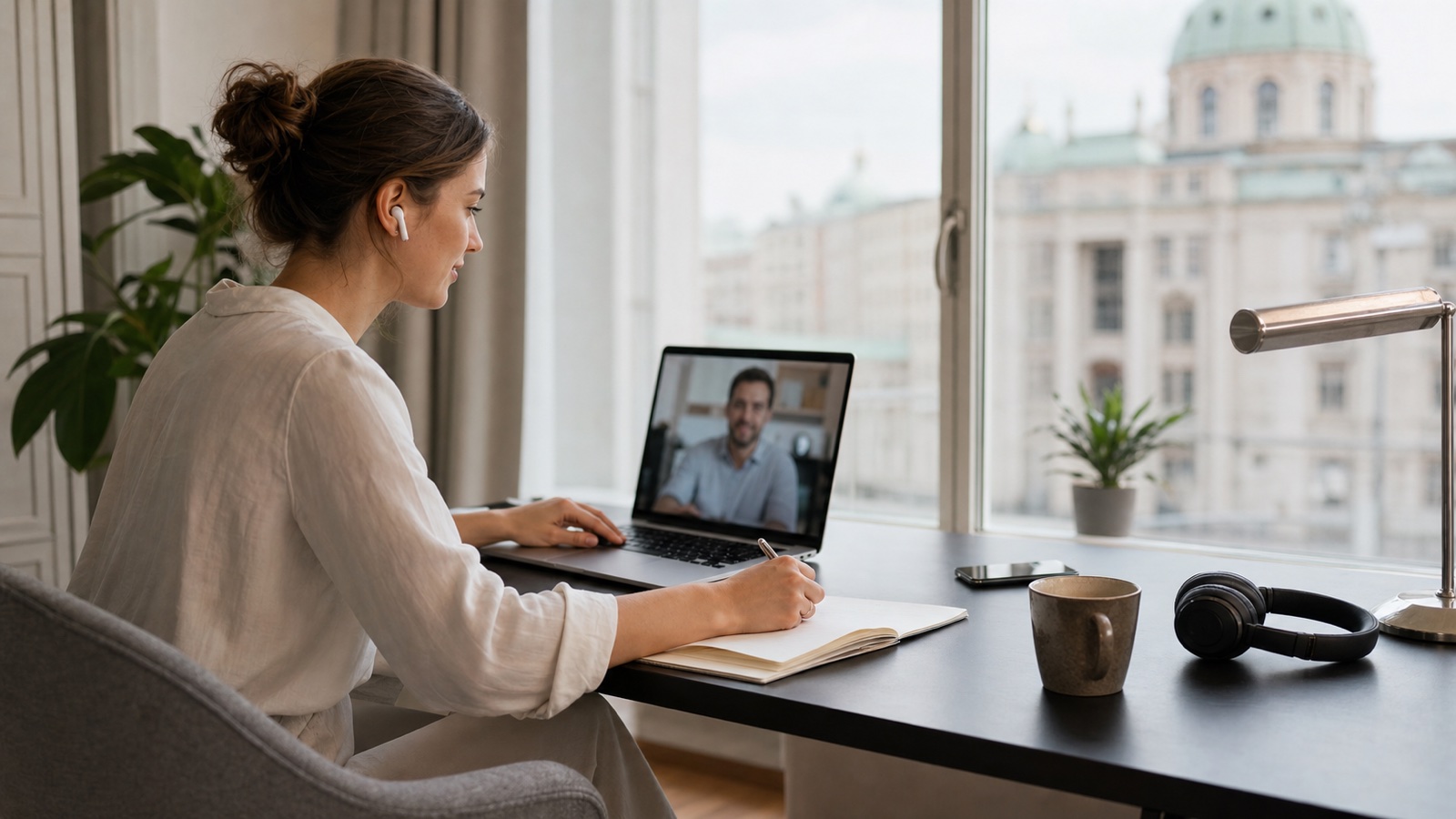
Summary:Since 2025, telework has been the legal umbrella term in Austria for home office and mobile working. In 2026, this is not just a labor law detail, but an important point in job searching, applications, and employee retention: anyone wanting flexible work should specifically clarify the place of work, equipment, cost reimbursement, availability, and accident insurance before signing a contract.
The Austrian labor market remains demanding in the spring of 2026. The AMS reported a challenging situation for April, while job vacancies are distributed very differently depending on the industry and region. At the same time, many employees are looking for jobs that better fit their everyday lives: less commuting time, more focus phases, better work-life balance, and clear rules for hybrid collaboration. This is exactly where telework becomes a quality feature of a job offer.
However, for applicants, it is not enough to just look for the word "home office" in an advertisement. What is actually agreed upon is decisive. Is it only allowed to work from one's own home, or also from a coworking space? Who pays for the laptop, monitor, internet share, or ergonomic equipment? How are working hours and availability documented? And what applies if an accident happens on the way to an agreed telework location?
Why telework is now a career factor
Flexible work has long ceased to be just a pandemic topic. According to WIFO, home office and hybrid models are changing the office and space concepts of Austrian companies, even if the development is not equally strong everywhere. For employees, this means: telework has become a part of work organization. It influences how teams work together, how management functions, and how attractive an employer appears in recruiting.
Especially in a more selective job market, a clear telework regulation can make the difference. Anyone comparing two offers should not just look at the monthly salary and job title. Commuting time, quiet work phases, caregiving duties, regional distance to the office, and the quality of digital collaboration can be just as decisive in the long term. A job with a slightly lower salary but clearly regulated telework days can bring more real quality of life for some households; a seemingly flexible offer without written rules, on the other hand, can quickly lead to conflicts.
For employers, telework is also more than a benefit. Good rules help manage expectations: Which activities are suitable for telework? When is presence in the office required? How are new team members onboarded? What minimum standards apply to data protection, IT security, and availability? Companies that answer these questions clearly in the advertisement or at the latest in the job interview appear more professional and avoid later disappointments.
Home office became telework: What the term means
Since January 1, 2025, Austrian law no longer speaks only of home office, but of telework. The term is broader: it refers to regular work outside the company's premises, typically using information and communication technology. This can still be one's own home, but under certain agreements, it can also be another private home, a coworking space, or another location not belonging to the company.
The Chamber of Labor (Arbeiterkammer) points out that existing home office agreements do not automatically become worthless. However, anyone who wants to work not only at home but also in other places in the future should adjust the agreement. The WKO also emphasizes: telework is a matter of agreement. In principle, there is no unilateral legal right for employees to telework, and no free right of instruction for the employer to simply order telework.
In practice, this means: the most important sentence is not "home office is possible," but "the details will be agreed upon in writing." This agreement should at least regulate where work may be performed, how often telework is possible, what work equipment is provided, how costs are reimbursed, what working time rules apply, and under what conditions the agreement can be changed or terminated.
What applicants should specifically ask in a job interview
Many jobs today are described as "hybrid," "remote possible," or "home office by arrangement." These formulations sound similar but can mean very different things. Applicants should therefore ask politely but precisely. Good questions are, for example: How many telework days per week are common after the onboarding period? Are there fixed team days in the office? Does the rule also apply during the probationary period? Is telework regulated in the employment contract, in an additional agreement, or via a works agreement?
Also important is the question about the place of work. Some companies only allow one's own home, others also allow coworking spaces or occasional work from another federal state. Anyone who wants to work regularly from abroad needs particularly clear information because tax, social security, data protection, and labor law responsibilities can become complex. For most applications in Austria, it makes more sense to first clarify the domestic telework regulation properly and address special cases only afterwards.
A good time for detailed questions is usually the second interview or the phase before accepting the contract. In the first interview, an open question about the work model and team rhythm is often sufficient. As soon as an offer becomes concrete, however, applicants should demand written clarity. This is not a vote of no confidence, but professional: telework concerns working hours, place of work, equipment, management, and health protection.
Equipment, cost reimbursement, and telework allowance
A frequent point of conflict is equipment. Anyone expected to work productively needs more than a private kitchen table and an old notebook. According to the WKO information on telework, digital work equipment and expense reimbursement are central points of the agreement. In practice, this is about a laptop, monitor, keyboard, mouse, headset, access tokens, software licenses, and sometimes also ergonomic issues.
In terms of taxes, the telework allowance remains relevant in 2026. The Chamber of Labor explains in its tax tips that the former home office term has been replaced by telework since 2025. For employees, it is important that tax allowances and income-related expenses do not automatically mean that the employer does not have to provide equipment. Labor law, tax law, and internal company guidelines are separate levels. Anyone bearing costs privately should collect receipts and check whether reimbursement by the employer or tax consideration is possible.
For applicants, a pragmatic question is particularly helpful: "What work equipment does the company provide as standard for telework?" The answer shows a lot about the maturity of the employer. Professional companies have a clear, repeatable answer to this. Vague statements like "We do that individually" are not automatically bad, but should be specified before signing the contract.
Working hours and availability: Flexible does not mean limitless
Telework can make work more focused, but it can also blur boundaries. Therefore, working hours, breaks, time recording, and availability should be clearly regulated. Anyone working from home is not available around the clock. Conversely, telework does not mean that coordination, meetings, or office appointments can be ignored at will.
A good telework rule therefore contains core hours or communication rules: When must employees be available? Which channels are used for urgent topics? Which meetings are mandatory in person? How are overtime hours approved? This sounds formal, but prevents stress. Especially for new employees, clarity is crucial because they do not yet know informal expectations.
For managers, the challenge is not to measure performance by visibility. Anyone leading hybrid teams needs clear goals, transparent priorities, and regular feedback. For employees, this means: telework works best when results, responsibilities, and deadlines are cleanly agreed upon. Anyone who asks about goal management and team communication in the job interview quickly recognizes whether an employer is truly capable of hybrid work or just writes a buzzword in the advertisement.
Accident insurance and place of work: Why the agreement counts
A particularly Austrian sticking point is accident insurance coverage. The Labor Inspectorate and the WKO point out that the specific telework location and the agreement play a role. The new telework law expands the view beyond one's own home, but continues to distinguish according to where and in what context work is performed. Commuting accidents can also be assessed differently, depending on whether the path leads to an agreed telework location or not.
For employees, this results in a simple rule: do not just work anywhere just because it is technically possible. Anyone who wants to work regularly in a coworking space, with relatives, or in another place should agree on this location or the permitted categories in writing with the employer. This is not bureaucratic, but protects both sides.
Employee protection also remains relevant. The Labor Inspectorate emphasizes that telework is not outside all protection rules. Evaluation, information, and instruction remain topics, even if private homes may only be entered with consent. For job seekers, this is a good quality criterion: reputable employers talk not only about flexibility, but also about health, data protection, and safe work equipment.
Using telework correctly in the CV and application
Anyone with experience in telework can present this positively in the application. However, it should not sound like a demand, but like a competence. Good formulations are, for example: "Experience in hybrid collaboration with distributed teams," "secure digital coordination with customers," or "independent prioritization in telework and presence phases." This shows that one does not just want to work from home, but has mastered the form of work.
It is particularly strong to mention concrete results: projects that were coordinated remotely, digital processes that were improved, or customer appointments that were efficiently handled online. Anyone applying for leadership roles should also show how team cohesion, onboarding, and feedback function in hybrid settings. Telework is then not a special request, but part of the professional way of working.
Anyone thinking about further education in parallel should also use the context. Digital collaboration, self-organization, data protection, project management, and AI competence fit well with hybrid jobs. More on this is offered by the jobspot article on Further education time in Austria 2026. Anyone wanting to know how artificial intelligence is changing everyday working life will find the supplementary article AI in the workplace Austria 2026.
Checklist before accepting
- Is telework regulated in writing or only announced verbally?
- Which locations are allowed: only own home, also coworking space, or other private places?
- How many telework days are realistic, and do they also apply after team changes?
- What work equipment does the employer provide?
- Is there cost reimbursement or clear information on the telework allowance?
- How are working hours, breaks, availability, and overtime documented?
- Which presence appointments are mandatory?
- How are data protection, IT security, and confidential documents handled?
- What applies to accident insurance and paths to agreed telework locations?
- Can the telework agreement be changed or revoked, and with what notice period?
Conclusion: Not just home office days count
Telework in Austria is a good example of how strongly career questions, labor law, and everyday life are connected. Flexible work can be a real advantage if it is cleanly agreed upon, technically well-equipped, and professionally lived in the team. However, it can become frustrating if only the advertisement sounds modern and the details remain open.
The most important CTA for applicants is therefore: ask specifically early enough, have promises recorded in writing, and evaluate telework as part of the overall package. Salary, tasks, management, further education, and work model should be considered together. Anyone who looks closely here will make better job decisions in 2026.
Sources and further information
- Chamber of Labor: Telework and home office
- WKO: Telework – labor law requirements
- Labor Inspectorate: Telework places, home office
- USP: Telework
- Chamber of Labor: Tax tips for home office/telework
- WIFO: Remote Work and the Change in Office Supplies Requirements for Austrian Companies
- AMS: Current labor market data Austria