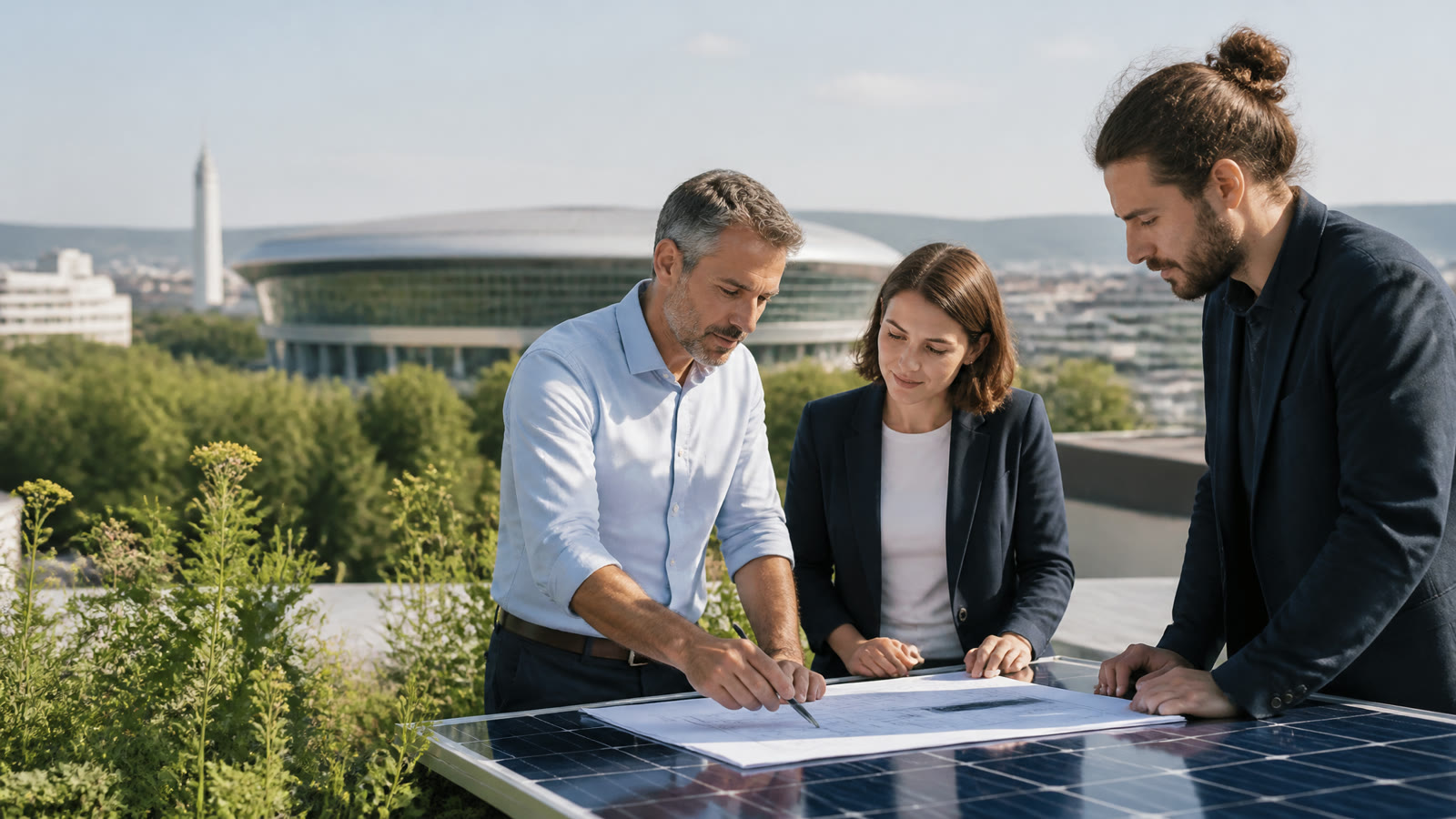
Vienna's newest energy wonder: The STEFFL Arena sets the standard!
On 14 December 2025, Wien Energie proudly announced the opening of its latest innovation: a façade photovoltaic system at the STEFFL Arena that not only supplies clean electricity but also cools the ice. This groundbreaking development could revolutionize the future of urban energy supply and help strengthen Vienna's pioneering role in climate protection.
A technical masterpiece in the heart of Vienna
With an installed capacity of around 45 kilowatt-peak (kWp), the façade photovoltaic system complements the arena's existing roof installation, resulting in a combined peak output of over 500 kWp. These impressive figures illustrate the potential of photovoltaics in urban areas, where space is scarce. But what does kWp actually mean? Kilowatt-peak is the unit of measurement for the maximum power a solar system can deliver under standardized test conditions.
The multifunctional façade: More than just power generation
The new system is a prime example of multifunctional architecture. In addition to generating electricity, it protects the arena's ice surface from direct sunlight during the afternoon hours. This significantly reduces the need for cooling energy, which not only lowers operating costs but also benefits the environment. "A double win for climate protection and ice quality," raves Karl Gruber, CEO of Wien Energie.
A look back: The history of photovoltaics
The use of solar energy is not a new invention. As early as 1839, the French physicist Alexandre-Edmond Becquerel discovered the photovoltaic effect. But it has only been in recent decades that technological advances and falling costs have enabled the widespread use of solar technologies. Austria has played a pioneering role in this regard, particularly Vienna, which has set ambitious climate targets.
The STEFFL Arena: A center for ice sports and innovation
Austria's largest ice sports center, the STEFFL Arena in Wien-Kagran, is not only home to the Vienna Capitals but also an important venue for public skating, school and youth training. The arena attracts around 100,000 visitors annually, which makes its electricity demand enormous. The new solar installations help to cover this demand sustainably.
Green electricity for ice hockey: A model for other federal states?
While Vienna impresses with its innovative use of photovoltaics, the question arises whether similar projects would be feasible in other federal states. Cities like Graz or Linz could learn from Vienna's example and initiate their own projects. The deployment of photovoltaics in urban areas could make an important contribution to achieving national climate goals.
The future of urban energy supply
The development at the STEFFL Arena shows that even densely built-up urban areas offer space for innovative energy solutions. Experts like Dr. Lisa Huber, an energy consultant from Vienna, are convinced that "the integration of solar technologies into urban infrastructure will play a key role in the energy transition."
The impact on citizens: More than just green energy
For Vienna residents, the new system means not only a reduction in CO2 emissions but also a stabilization of energy prices. In the long term, such projects could help reduce dependence on fossil fuels and increase supply security.
An outlook: what does the future hold?
The opening of the façade photovoltaic system is only the beginning. Wien Energie is already planning further projects to make the city even more sustainable. With ongoing developments in technologies such as battery energy storage or the use of hydrogen as an energy carrier, Vienna could become one of the greenest cities in Europe in the coming years.
On 14 December 2025, the opening of the new system marks a milestone in the history of urban energy supply. It will be exciting to see how these developments affect the city and its residents.