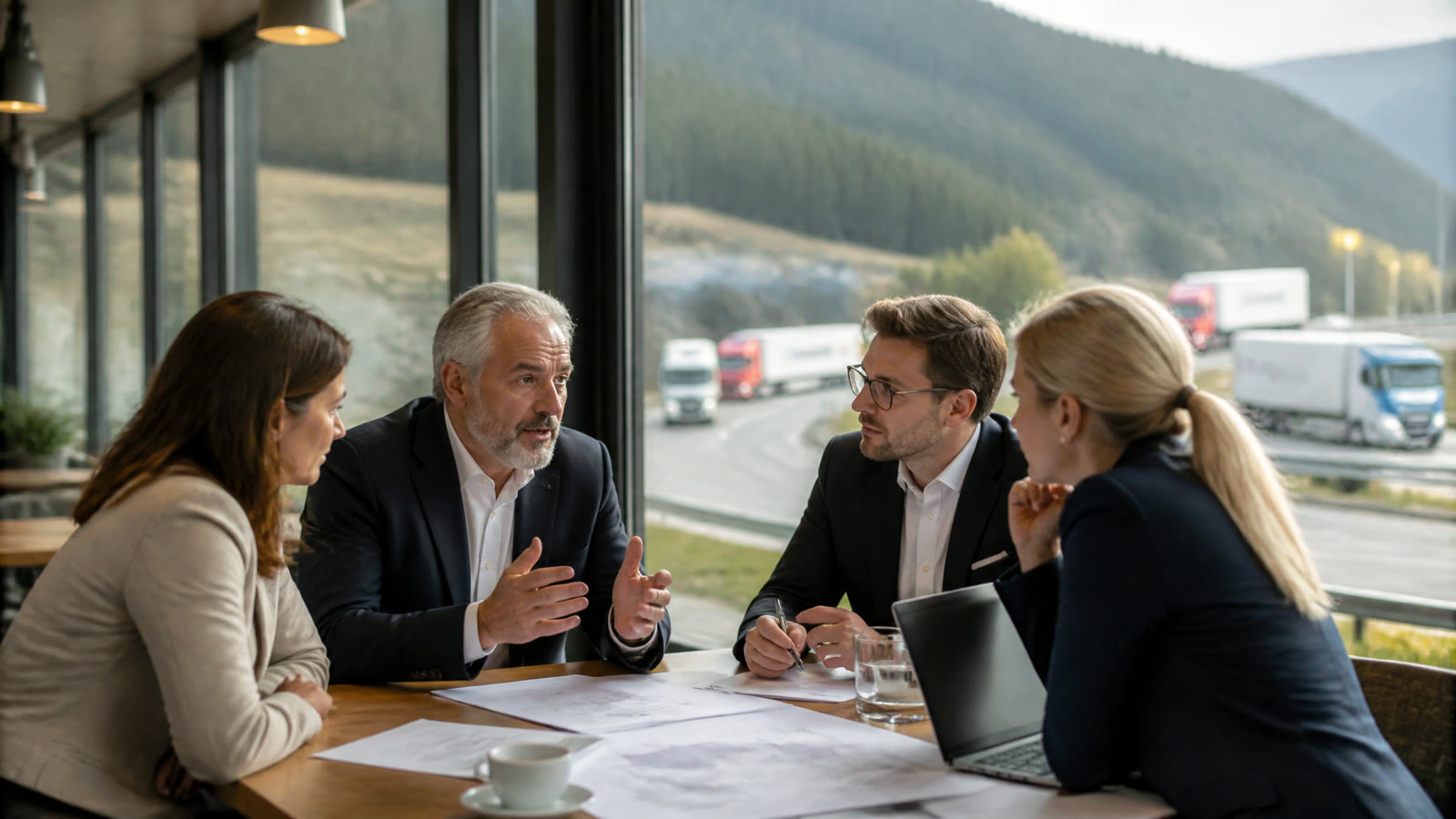
An outcry shakes Tyrol's streets
On 10 September 2025, a press release from the Tyrol Chamber of Labour caused a stir: AK president Erwin Zangerl is calling for a drastic increase in the truck toll, meeting fierce resistance from the transport industry. The planned increase of €5 on the Kufstein–Brenner route is intended to cover the external costs of road freight transport, such as noise nuisance and CO₂ emissions. But what does this mean for the people of Tyrol, and why is this proposal provoking such heated debate?
Why Tyrol?
Tyrol, known as a transit region, is affected daily by heavy traffic. In particular, freight traffic on the Brenner motorway places an immense burden on the environment and local residents. Historically, Tyrol has always been an important hub for the movement of goods between Northern and Southern Europe. However, this strategic location also brings challenges that the proposed toll increase is now intended to address.
The facts on the table
The proposal calls for a €5 toll increase for heavy goods vehicles. The measure aims to reflect the true costs of transport by incorporating the burdens caused into toll rates. According to Zangerl, this is not only fair but also necessary to protect the health of Tyrol's population.
What are external costs?
External costs arise when the negative impacts of an activity, such as noise and pollution from trucks, are not borne by those responsible. Instead, they are shifted onto society. The proposed toll increase is intended to internalise these costs, meaning the parties responsible must pay for the damage they cause.
Reactions from the transport industry
The transport industry has reacted with outrage to the planned toll increase. Industry representatives argue that this measure could lead to a significant financial burden. "It is a slap in the face of logistics companies that are already struggling with high operating costs," said a fictional spokesperson for the Tyrolean Transport Association.
Comparison with other federal states
A look beyond Tyrol's borders shows that similar measures are being discussed in other parts of Europe. In Germany, for example, there have been debates for years about adjusting the truck toll to reduce environmental impacts. In Switzerland, a performance-related heavy vehicle charge is also levied, which is based on kilometers driven and pollutant emissions.
The impact on citizens
For the citizens of Tyrol, the toll increase could have positive long-term effects. A reduction in truck traffic would lead to less noise and cleaner air. In addition, a shift of freight transport to rail could be encouraged, further easing road traffic. Experts warn, however, that short-term price increases for consumer goods are also possible, as transport costs may be passed on to consumers.
Expert opinions on the toll increase
"Raising the truck toll is a necessary step to reduce the environmental impacts of road freight transport," explains a fictional transport expert from the University of Innsbruck. "In the long term this will improve not only the environment but also the quality of life for residents."
A glimpse into the future
The debate over the toll increase in Tyrol is symptomatic of the challenges faced by many European countries. Balancing economic interests and environmental protection is a complex issue that will continue to provoke heated debates in the future. If the plans are implemented, Tyrol could become a pioneer for a more sustainable transport policy in Europe.
Political contexts
The toll increase is not only an economic but also a political decision. It is part of the European Union's efforts to reduce CO₂ emissions and advance climate protection. As a member state, Austria has committed to supporting and implementing these goals.
Conclusion: A controversial topic with far-reaching consequences
The planned toll increase in Tyrol raises many questions and highlights the tensions between economic and environmental interests. While the transport industry fears for its competitiveness, environmentalists see it as a step in the right direction. The coming months will show how the situation develops and what impact the decisions will have on Tyrol and beyond.