Vienna in repair fever: Young people as the new heroes of sustainability
On December 17, 2025, Vienna became the scene of a remarkable recognition in the world of education for sustainable development. The project 'Jugend-Reparatur-Kultur', an innovative collaboration between the Verein Wiener Jugendzentren, DIE UMWELTBERATUNG and the Reparaturnetzwerk Wien, achieved second place in the prestigious BNE award. But what lies behind this success and why is it exciting the masses? We dive deep into the world of the young tinkerers.
What is the BNE award?
The BNE award stands for 'Education for Sustainable Development'. This award honors projects that link education with sustainability and thereby contribute to environmental protection and social responsibility. In a world where sustainability is gaining increasing importance, such initiatives are of inestimable value.
Repair instead of throwing away: The philosophy behind the project
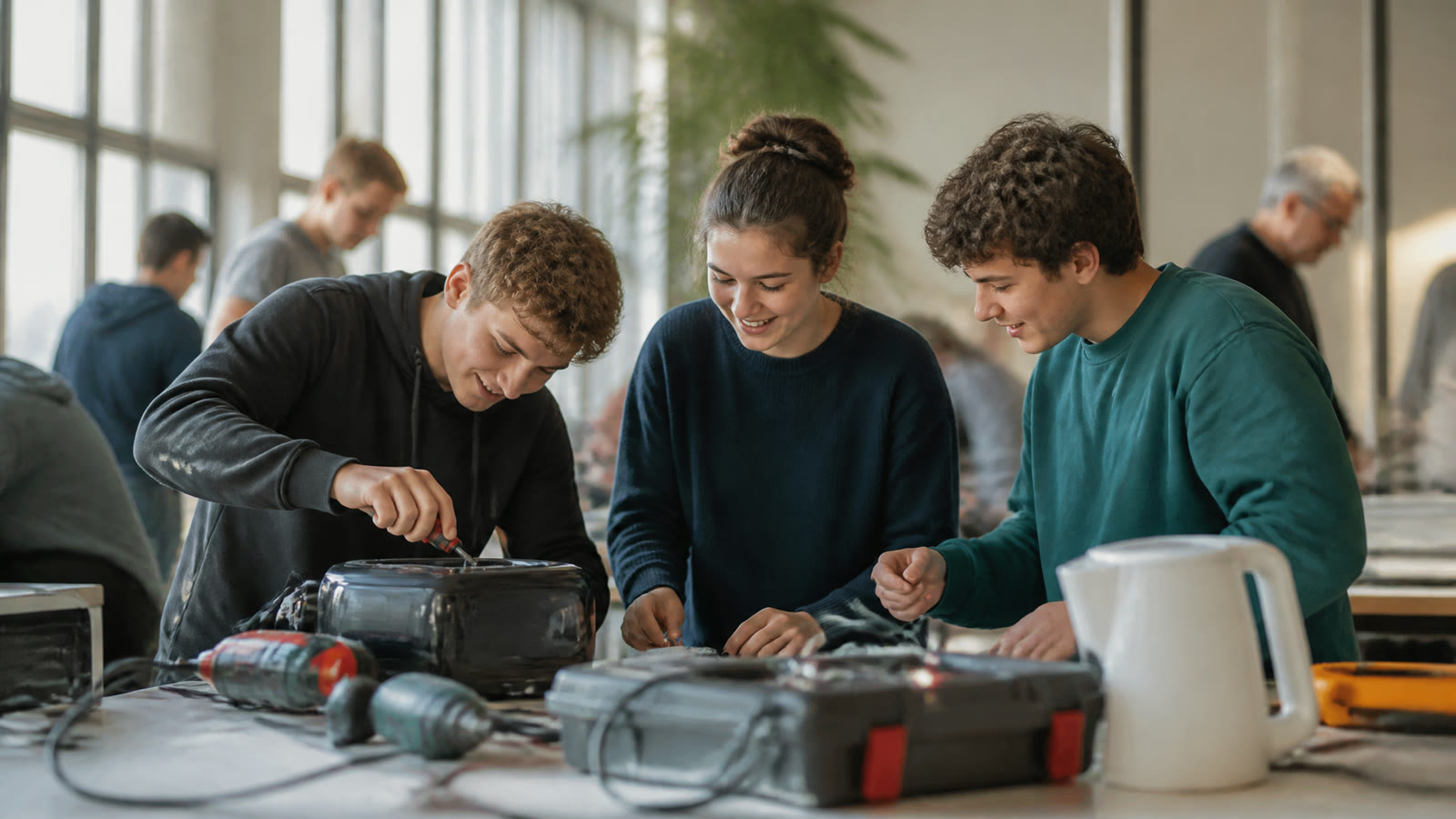
The core of the 'Jugend-Reparatur-Kultur' project are low-threshold workshops that teach young people practical skills. These workshops are designed to be accessible to everyone, regardless of their socioeconomic background. Participants learn to repair bicycles, service game consoles and even assemble computers. A practical report on these workshops is available on DIE UMWELTBERATUNG's website.
- Repair bicycles
- Repair game console controllers
- Service mobile phones
- Assemble computers
A project with social and environmental added value
Christian Holzhacker, educational director of the Verein Wiener Jugendzentren, explains: 'In the workshops, the young people gain the know-how to carry out simple repairs and maintenance work themselves. They learn practical skills, save money and can also help out in their families and among friends.' These skills are not only beneficial for the participants, but they also make an active contribution to environmental protection by reducing waste and saving resources.
The success story: From idea to implementation
The first workshops were held in 2024 at the Hirschstetten and Seestadt youth centers. Due to the great success, activities were expanded in 2025 to six youth centers. A total of 72 workshops took place, in which not only bicycles and electronic devices were repaired, but also donated laptops from the company TechLine were made functional again. These laptops are now available to the young people and enable digital participation.
A look at the numbers
The positive impacts of the project are impressive:
- Low-threshold access to repair know-how
- Waste prevention and conservation of raw materials
- Cost savings through repairs
- Climate-friendly mobility through repaired bicycles
- Digital inclusion through functional laptops
Markus Piringer, circular economy expert from DIE UMWELTBERATUNG, emphasizes: 'Repairing saves waste and also resources that would be needed to manufacture new products. The young people therefore also make an active contribution to environmental protection.'
The road to the future: Sustainability as the key to success
Although the project ends at the end of 2025, the Wiener Jugendzentren plan to continue the repair activities. The cooperation with the Reparaturnetzwerk and DIE UMWELTBERATUNG has shown that such projects are not only possible but can also be sustainably successful. The waste prevention funding of the collection and recycling systems for packaging financially supported the project and will likely continue to play an important role in the future.
Expert opinions and visions for the future
A fictional expert on sustainable education, Dr. Max Grünwald, says: 'This project is a prime example of how education and sustainability can go hand in hand. It shows that through practical education we not only impart knowledge but can also have a direct impact on the environment.'
The vision for the future is clear: more projects like this that combine sustainability and education to create a better world for future generations.
A role model for other federal states
The success of the project in Vienna could serve as a model for other federal states. At a time when sustainability is on everyone's lips, similar initiatives could also be launched in other cities and regions. The advantages are obvious: education, environmental protection and social integration in one.
The city of Vienna has set a milestone with this project and shows how well-thought-out educational projects can positively influence not only young people but society as a whole.