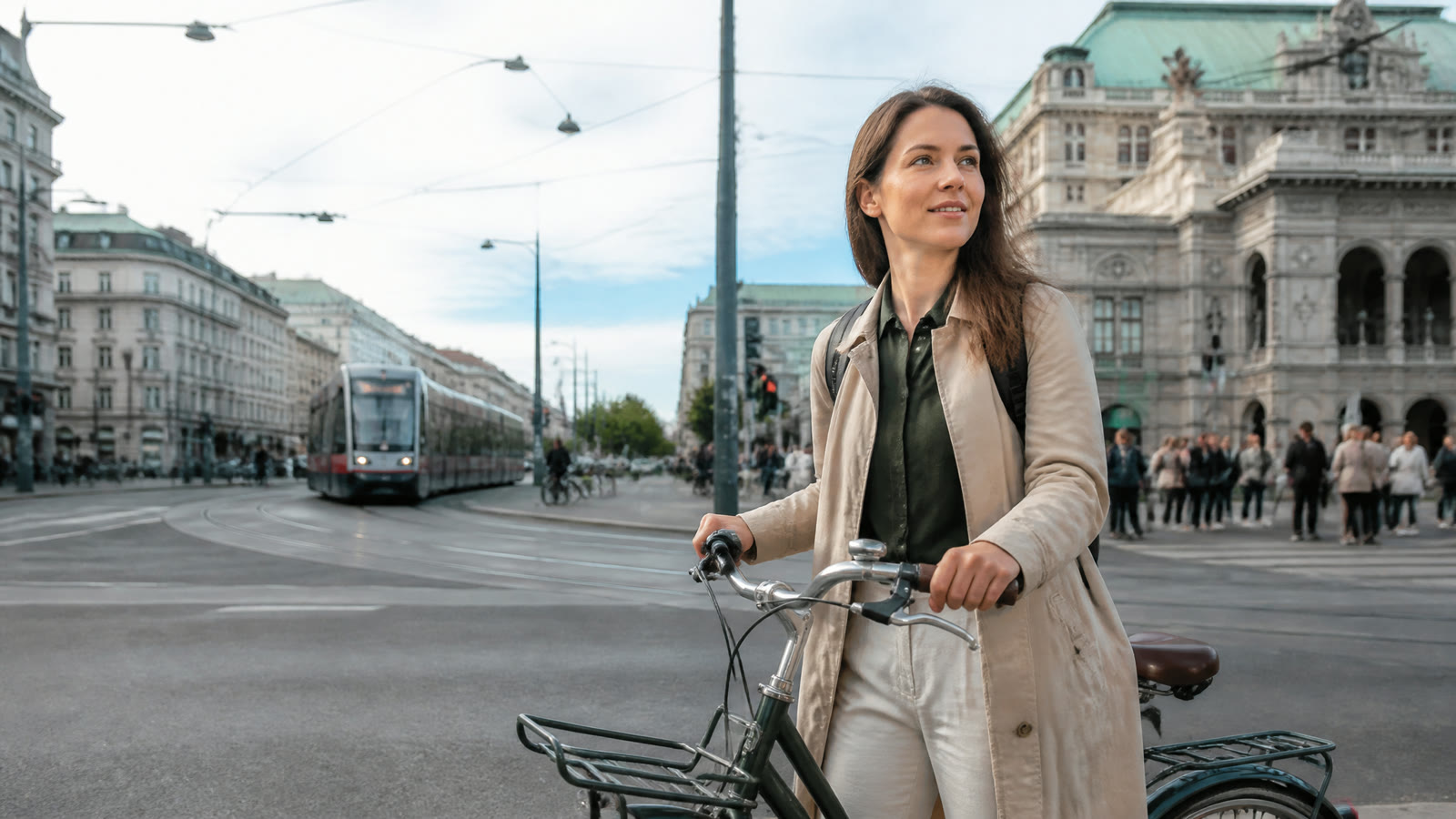
Vienna in Turmoil: The Green Wave Is Rolling In!
Today, on February 18, 2026, Vienna's red-pink city government announced a groundbreaking initiative intended to revolutionize public transport. The announced acceleration of tram and bus lines has raised the hopes of many Viennese. But what really lies behind this 'Green Wave' and why is it so crucial for the city's future?
A long-overdue step
The mobility spokespeople for Green Vienna, Heidi Sequenz and Kilian Stark, welcomed the initiative, while stressing that the measure was long overdue. For years the Greens have been advocating for more traffic light priority and dedicated lanes for public transport. 'More traffic light priority, dedicated lanes and an end to blockages caused by illegal parkers – that's exactly what we've been fighting for as Greens for years,' said Sequenz and Stark.
The demand for a 'Green Wave for public transport' was already put forward by the Greens at the end of 2022, but only now is the city government showing movement.
What does 'Green Wave' mean?
The term 'Green Wave' refers to a traffic control measure in which traffic lights are coordinated so that road users—in this case buses and trams—encounter green lights when travelling at a constant speed. This significantly reduces waiting times at traffic lights and ensures a smoother traffic flow.
Historically, the 'Green Wave' was first introduced in the 1960s in various cities worldwide to optimize car traffic. But applying it to public transport is a relatively new phenomenon.
Comparison with other cities
A look beyond Vienna's city limits shows that similar concepts have already been successfully implemented in other European metropolises. In Amsterdam and Copenhagen, for example, the introduction of priority signaling for public transport has led to a significant reduction in travel times. These cities are considered pioneers in sustainable transport concepts and could serve as role models for Vienna.
The concrete effects on citizens
But what does the implementation of the 'Green Wave' concretely mean for Vienna's citizens? First of all, travel times for buses and trams are expected to be significantly reduced. This could not only increase comfort for passengers but also boost the attractiveness of public transport.
For commuters, this could mean sleeping longer in the morning and getting home faster in the evening. The punctuality of public transport could also improve, which would be a great advantage especially during rush hours.
The role of the SPÖ and the red-pink coalition
Interestingly, the SPÖ, the Social Democratic Party of Austria, had rejected the Greens' proposals on this topic for years. Mobility spokespeople Sequenz and Stark criticize the Social Democrats for having downplayed the problem for a long time. But now the red-pink coalition, consisting of the SPÖ and NEOS, appears to have changed its stance.
'It's good that the red-pink coalition is now showing movement. But we also say clearly: the SPÖ rejected our proposals on this for years and downplayed the problem,' said the Greens' representatives.
Expert opinions and statistical data
Traffic experts see the introduction of the 'Green Wave' as positive, but warn that its implementation requires a comprehensive adjustment of the existing traffic infrastructure. According to a study by the Vienna University of Technology, increasing traffic light priority for buses and trams could reduce average travel times by up to 20%.
Statistics from other cities show that such a measure can also reduce environmental impact, as less stop-and-go traffic leads to lower fuel consumption and thus lower emissions.
A look into the future
The introduction of the 'Green Wave' could be the first step in a more comprehensive redesign of Vienna's transport network. In the long term, this could lead to increased use of public transport, which would not only relieve the roads but also improve the quality of life in the city.
The Greens are now calling on the city government to implement the measures quickly so that passengers can quickly feel the promised improvements. 'Now passengers must quickly experience real improvements: stopping only at stops instead of losing time at traffic lights and in traffic jams behind cars is our goal,' emphasize Sequenz and Stark.
Political contexts and dependencies
The decision of the red-pink coalition to implement the Greens' demands could also be politically motivated. In view of the growing importance of environmental and transport issues in public debate, the implementation of the 'Green Wave' could be seen as a strategic move to win environmentally conscious voters.
It remains to be seen how the political landscape in Vienna will develop in the coming years and whether the Greens can further expand their influence.
Conclusion: A step in the right direction
The announcement of the 'Green Wave' is undoubtedly a step in the right direction for public transport in Vienna. Although the measure is long overdue, the current development shows that sustainable transport concepts are gaining increasing importance even in a traditionally car-oriented city like Vienna.
The people of Vienna can look forward with interest to how the city government's plans will be implemented in practice and what further steps will follow to make the city even more livable.