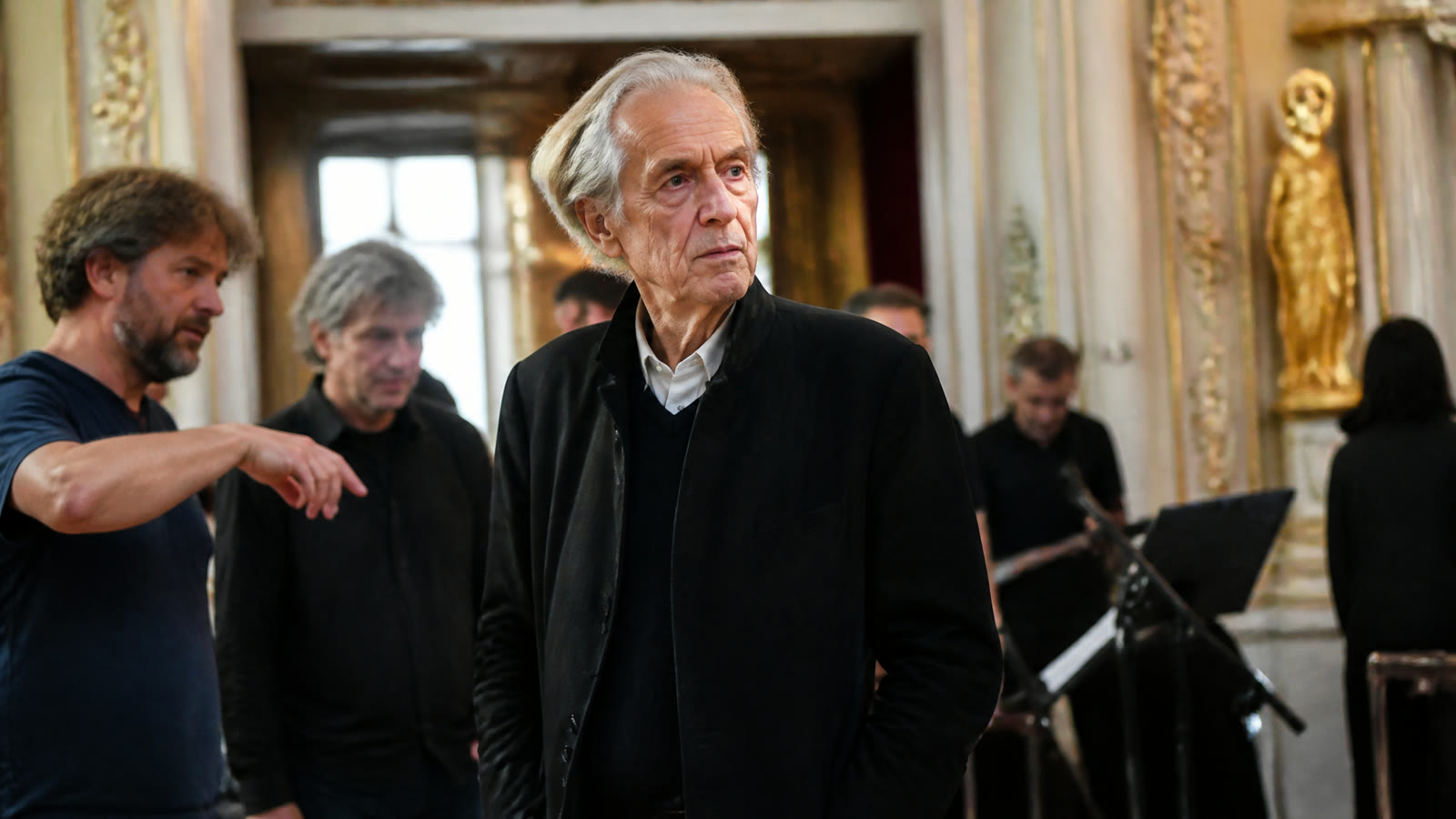
A special kind of TV event: ORF III commemorates Claus Peymann
Vienna (OTS) – On Saturday, July 19, 2025, ORF III will delight the Austrian television audience with a special program edition in memory of Claus Peymann. In a special edition of "Kultur Heute" titled "Claus Peymann: Master of Provocation," actress and director Maria Happel will be welcomed for a conversation by Peter Fässlacher. This broadcast marks the beginning of a TV event that will make the hearts of theatre lovers beat faster.
Claus Peymann: A master of stage art
Claus Peymann, a name synonymous in the theatre world with provocation and innovation, was an important director and long-time director of the Vienna Burgtheater. His productions were often controversial but always memorable. He was known for taking up social and political themes and bringing them to the stage with a unique sense of drama.
A highlight of his career was undoubtedly the world premiere of Thomas Bernhard's drama "Heldenplatz" in 1988, which caused a great stir and went down in history as one of the most controversial theatre productions. The play addresses Austria's post-war period and the emerging antisemitism, which at the time acted like a wake-up call for society.
"Heldenplatz": A scandal with historical roots
The plot of "Heldenplatz" takes place after the suicide of Professor Josef Schuster, who, due to increasing antisemitism, jumps out of the window of his apartment at Heldenplatz. This dramatic story reflects the tensions and unresolved conflicts of Austria's post-war period. Family and friends discuss the suicide and the political and social conditions of the time.
The performance at the Burgtheater under Peymann's direction was a milestone that inflamed passions and led to heated discussions. ORF III is now showing this original recording on television for the first time in over 25 years. The play's last TV appearance was in 2000 on 3sat.
A reunion with the original cast
The original cast of the play includes renowned actors such as Wolfgang Gasser, Kirsten Dene, Elisabeth Rath, Martin Schwab, Marianne Hoppe, Frank Hoffmann, Bibiana Zeller, Detlev Eckstein, Anneliese Römer and Therese Affolter. Their performances contributed significantly to the success and intensity of the production.
A TV moment not to be missed
For theatre lovers and culture enthusiasts, the broadcast of "Heldenplatz" is a must. It is not only an opportunity to experience a piece of Austrian theatre history, but also to engage with themes that remain relevant. The combination of historical context and provocative staging makes this TV evening an unforgettable experience.
The significance of Peymann's work for today
Claus Peymann's works remain of great importance today. They encourage reflection on current social developments and urge people to confront their own history. His courage to tackle controversial topics is a legacy that has become rare in today's theatre landscape.
Experts agree that Peymann's productions are still relevant today. "Peymann knew how to put his finger on the wound and provoke society to trigger change," says theatre critic Dr. Hans Müller. "His works are a call to the responsibility of each individual not to look away but to take action."
Comparison with other federal states
In other federal states of Austria, Peymann's legacy is also honored, but in different ways. While Vienna, with its rich cultural heritage and the Burgtheater as the centre of the theatre world, is prominent, other federal states rely on local productions and modern interpretations of his works. This diversity shows how broad Peymann's influence is and how differently it can be interpreted.
The impact on society
The broadcast of "Heldenplatz" on ORF III could spark a new discussion about the play's themes. Recent political developments in Europe and the world have shown that antisemitism and xenophobia are still present. Peymann's work could serve as a catalyst for societal debates and help raise awareness of these issues.
A look into the future
The future of theatre will be shaped by directors who have the courage to follow in Peymann's footsteps. His works serve as inspiration for young artists who are willing to take new paths and bring societal challenges to the stage. The broadcast of "Heldenplatz" could be the starting signal for a new era of political theatre that addresses current issues and prompts the audience to reflect.
With this program choice, ORF III is making a statement about cultural responsibility and showing that television can still play an important role in the cultural discourse even in times of streaming services and digital media. Viewers can look forward to a TV experience that is both entertaining and thought-provoking.
Concluding thoughts
In a time when fast entertainment often prevails, the return of "Heldenplatz" to television is a refreshing and important statement. It shows that profound and provocative content still has a place in the mainstream and that interest in cultural and historical topics remains unabated.
On July 19 and 20, 2025, all theatre and culture enthusiasts should gather in front of their TVs to experience this extraordinary piece of history once more. The broadcast of "Heldenplatz" is more than just a remembrance of Claus Peymann – it is a call not to forget the past and to learn from it.